
HUAYE-301 Three-Component Conveyor Belt Repair Adhesive
The HUAYE-301 is a premium 3-component cold bonding rubber repair compound engineered for durable conveyor belt surface repair. Perfect for fixing large-area abrasion and surface gouges without heating equipment. This high-strength conveyor belt repair adhesive features a rapid surface cure in just 15 minutes, allowing light load operations to safely resume in as little as 30 minutes.
- Fast-acting conveyor belt repair adhesive with 15-minute surface cure
- Minimizes downtime — resume light load operation from 30 minutes
- Advanced 3-component cold bonding rubber repair compound system
- High-strength formula optimized for large-area conveyor belt surface repair
Built for Heavy-Duty Conveyor Belt Surface Repair
When conveyor belt surfaces suffer gouges, cuts, or large-area abrasion from bulk materials — coal, ore, sand, clinker — HUAYE-301 provides a fast, field-applicable cold-bonding solution. As a reliable conveyor belt repair adhesive, its three components work together: a base resin, a curing agent, and a rubber-activating primer, delivering a repaired zone that flexes with the belt and resists re-damage under continuous load.
Surface cure in 15 minutes. This fast-acting conveyor belt repair adhesive lets the belt return to light load in 2 hours and full operational load in 4 hours — without removing the belt or sourcing hot vulcanizing equipment.
Where HUAYE-301 Is Used
HUAYE-301 is suited to surface gouge and large-area abrasion repair on EP, steel-cord, and rubber conveyor belts across:
Mining and quarrying operations where impact damage and abrasive bulk materials cause frequent surface wear; port terminals handling coal, ore, and aggregate; and industrial plant conveyors where minimizing downtime with a high-performance conveyor belt repair adhesive is the preferred alternative to costly belt replacement.
Technical Specifications
| Product Type | 3-component cold-bonding conveyor belt repair adhesive |
|---|---|
| Application | Belt surface gouges, cuts, abrasion — EP, steel-cord, rubber belts |
| Tensile Strength | 30 MPa (requirement ≥25 MPa) |
| Peel Strength | 13 N/mm (requirement ≥10 N/mm) |
| Elongation at Break | 440% (requirement ≥400%) |
| Right-Angle Tear Strength | 75 kN/m (requirement ≥60 kN/m) |
| Hardness | Shore A 76 (requirement 70–80) |
| Pot Life (at 25°C) | 5–8 minutes — apply immediately after mixing |
| Surface Cure | 15 minutes |
| Light Load Operation | 2 hours after application |
| Full Load Operation | 4 hours after application |
| Curing Method | Room temperature, no heating equipment required |
| Shelf Life | 12 months (sealed, cool, dry storage) |
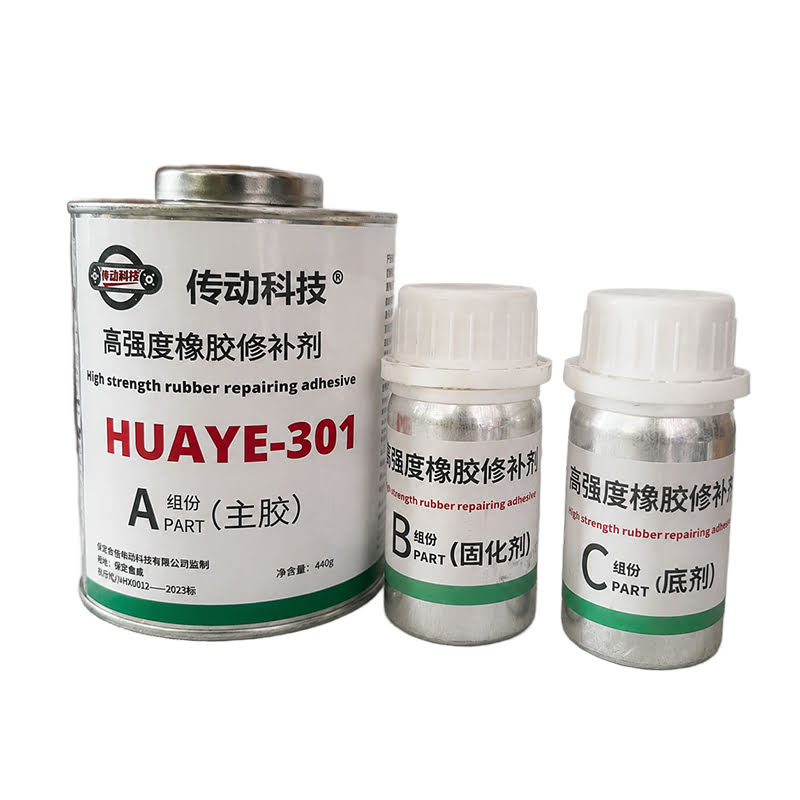
| Packaging | Component A (main adhesive): 440 g/can | Component B (hardener): 22 g/bottle | Component C (primer): bottle + powder |
How to Apply HUAYE-301 Conveyor Belt Repair Adhesive
- Grinding: Use a tungsten steel grinding disc to thoroughly roughen the damaged belt surface. Avoid discoloration, brightening, or burning the rubber substrate during grinding.
- Surface Treatment: Pour the powder from the Component C primer bottle cap into the liquid bottle and shake until fully dissolved. Apply the mixed primer to the treated surface and allow to dry completely for 15 minutes.
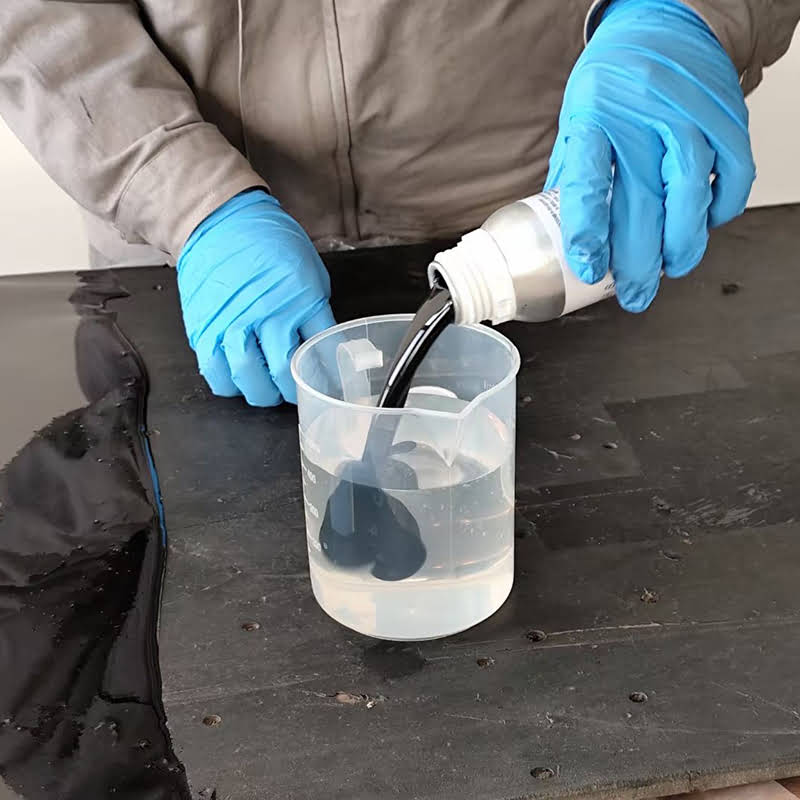
- Mixing: Mix Component A and Component B at a strict 20:1 ratio by weight. Stir thoroughly within 1 minute and apply immediately — the pot life of this conveyor belt repair adhesive is only 5–8 minutes. Prepare only the quantity needed for immediate use.
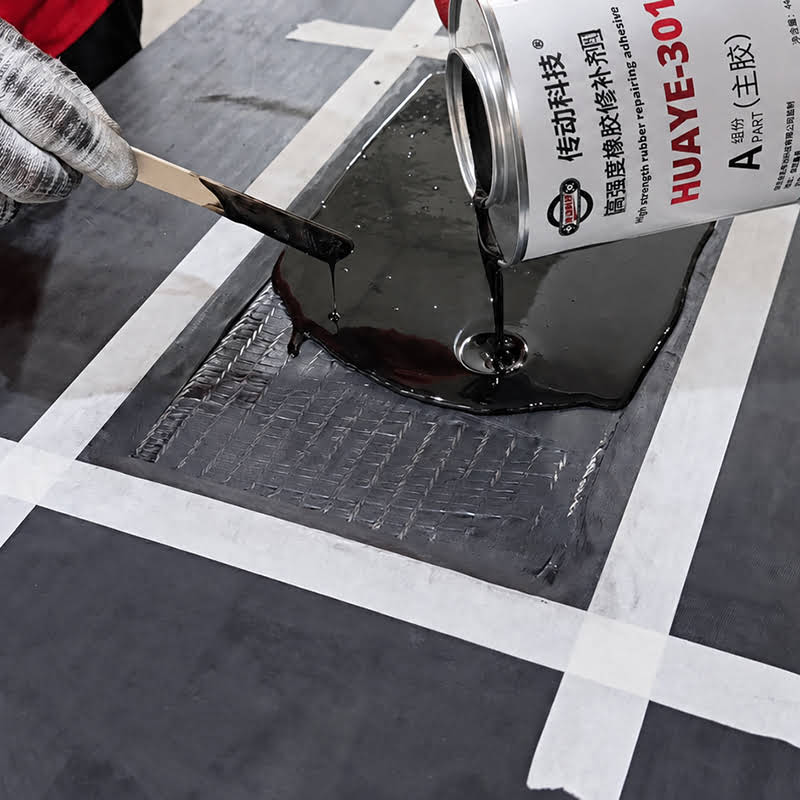
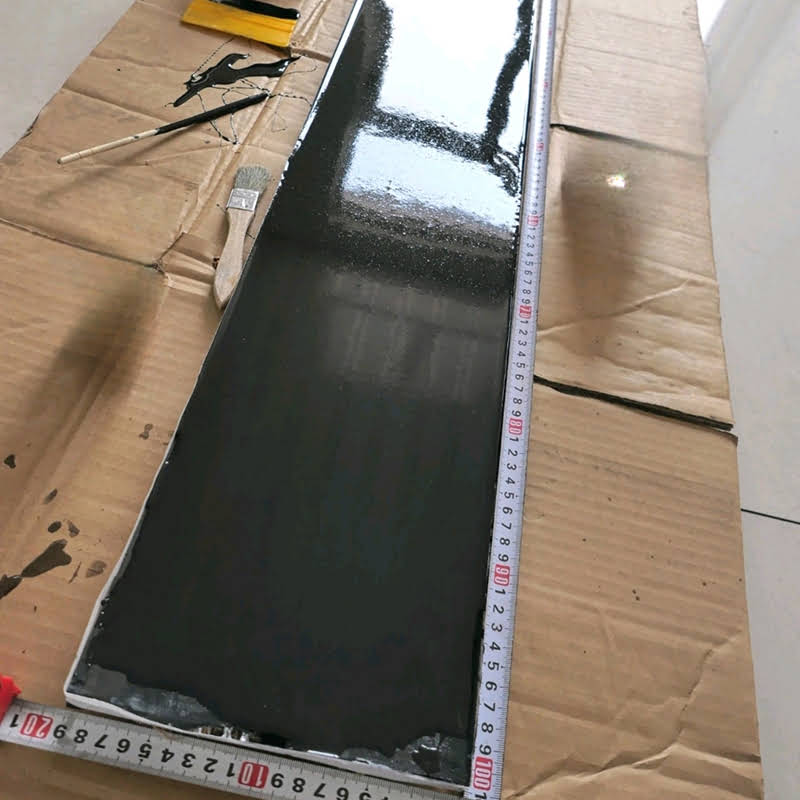
- Application: Spread the mixed adhesive onto the repair zone with a rubber scraper or short-bristle brush. Keep each coat within 2 mm thickness. For deep cuts, apply in multiple sequential layers.
Packaging
Handling Notes
Pot life is only 5–8 minutes after mixing this conveyor belt repair adhesive — prepare only the quantity you can apply immediately. Do not mix more than needed.
Low temperature warning: below 15°C, curing decelerates. Apply mild external heating (heat gun or IR lamp) after application if needed — do not exceed 40°C on the repair zone.
Ensure adequate ventilation at the work site during mixing and application.
Store sealed in a cool, dry location away from heat sources and direct sunlight.
Frequently Asked Questions
What types of belts is HUAYE-301 compatible with?
HUAYE-301 is suitable for surface repair on EP (polyester-nylon), steel-cord, and rubber conveyor belts. It is designed as a specialized conveyor belt repair adhesive for surface gouges, cuts, abrasion, and impact damage — not for full joint splicing.
How long does HUAYE-301 take to cure?
Surface cure takes 15 minutes. The belt can return to light load operation after 2 hours and full load operation after 4 hours, at an ambient temperature of 25°C.
What is the pot life after mixing?
Once Component A and Component B are mixed, the pot life of the conveyor belt repair adhesive is 5–8 minutes. The mixed adhesive must be applied immediately. Prepare only the quantity needed for immediate use to avoid waste.
Can HUAYE-301 be used in cold environments?
Yes, but curing slows below 15°C. To accelerate curing in cold conditions, apply mild external heating using a heat gun or infrared lamp after applying the conveyor belt repair adhesive — keep the repair zone temperature below 40°C.
What is the mixing ratio for Components A and B?
Component A (main adhesive) and Component B (hardener) must be mixed at a strict 20:1 ratio by weight. Incorrect ratios will affect curing performance and final bond strength.
What is the shelf life of HUAYE-301?
12 months from the date of manufacture when stored in sealed, dry conditions at room temperature, away from direct sunlight and heat sources.
Need 301 for Your Next Belt Repair?
Tell us your belt type and operating environment — we’ll confirm quantities, packaging, and shipping to your location.
Chat with Peter Zhang on WhatsApp