
Conveyor Belt Repair Strip & Repair Patch
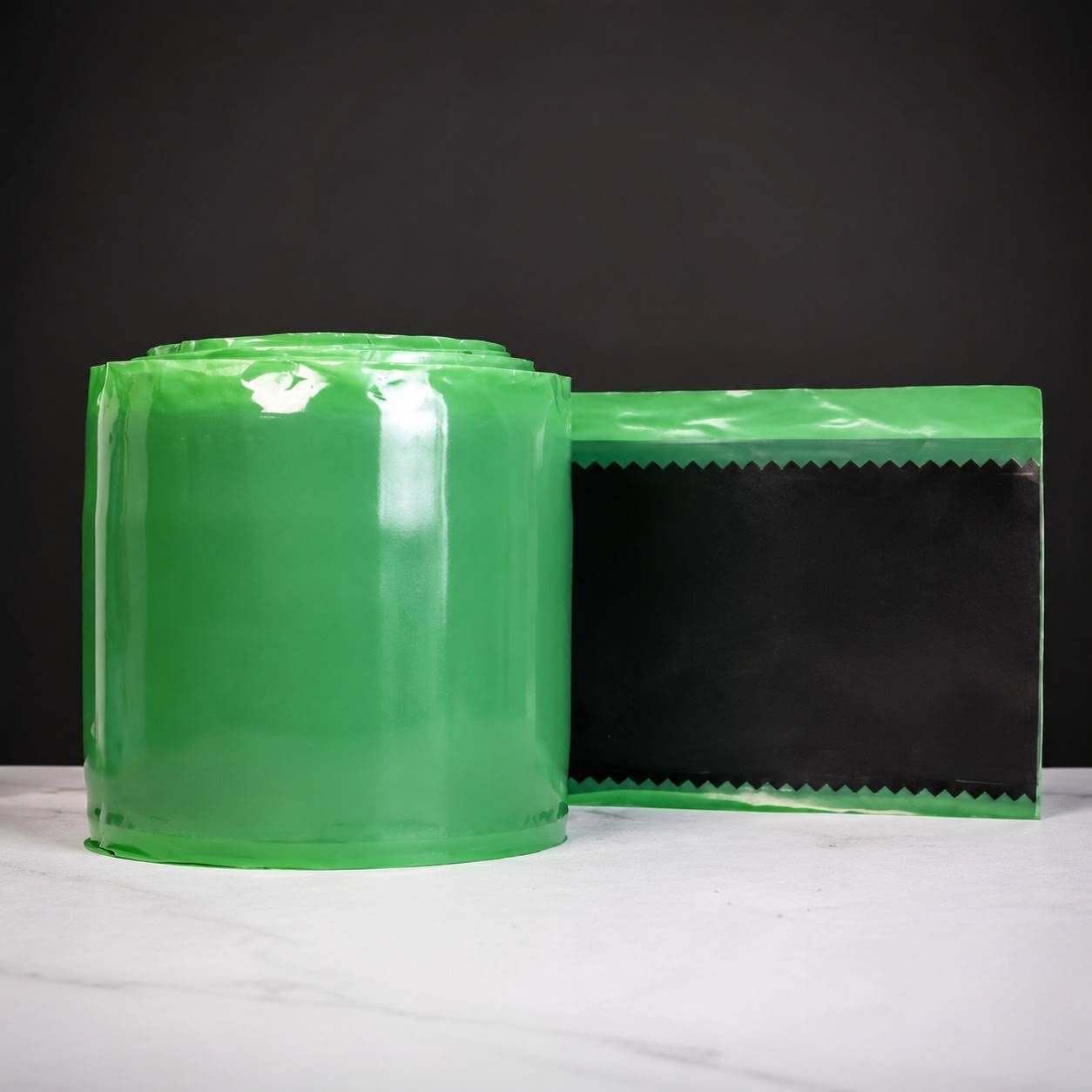
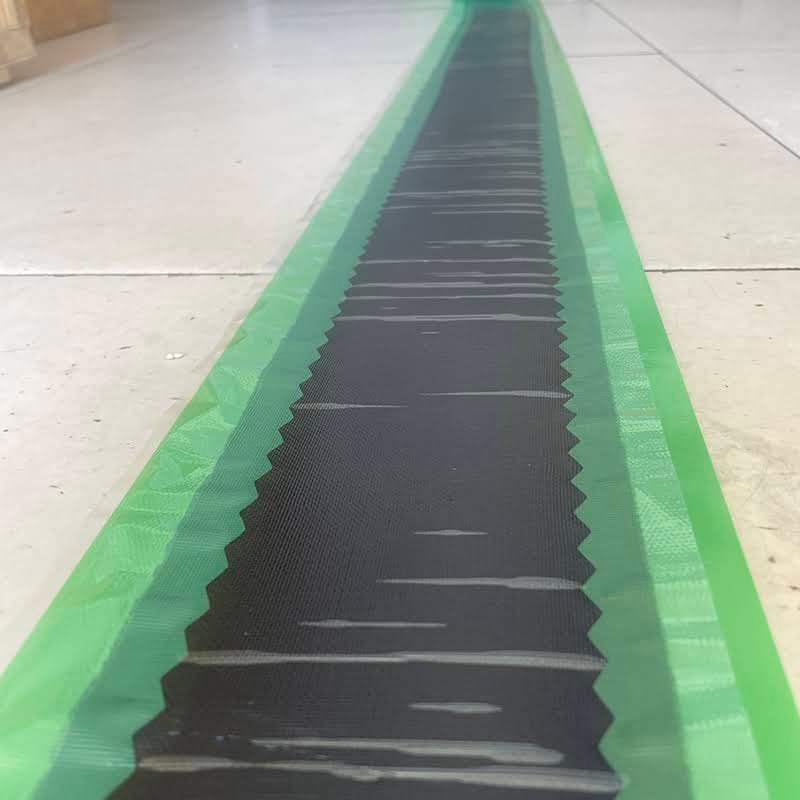
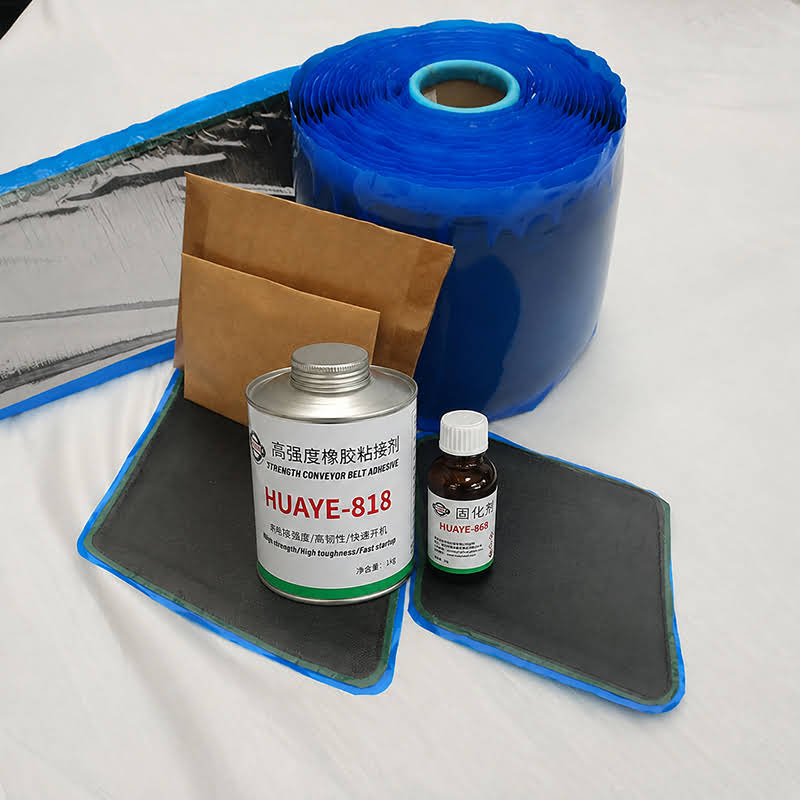
Conveyor Belt Repair Strip and Repair Patch are cold-bonding rubber repair materials featuring a factory-applied CN semi-cured backing layer. Used together with HUAYE-818 cold vulcanizing bonding agent, they let your maintenance team handle scratches, longitudinal rips, and punctures directly on site — no vulcanizing press or heat source required.
- No Vulcanizing Press Required — Cold-Bonded with HUAYE-818
- Compatible with EP, NN, Steel Cord & PVC Belts
- Repair Strip Sold in 10-Meter Rolls; Repair Patch Sold by the Piece
- Standard & Reinforced Types Available
Match Your Repair Scenario
Conveyor Belt Repair Strip and Repair Patch are applied cold with HUAYE-818 bonding agent — no vulcanizing press, no curing oven, no waiting for hot equipment to heat up. A maintenance team can identify the damage type, select the right format below, and get the belt back in operation without specialist tooling.
Field Failure Scenarios — Which Format to Use
| Damage Type | Recommended Format | Why |
|---|---|---|
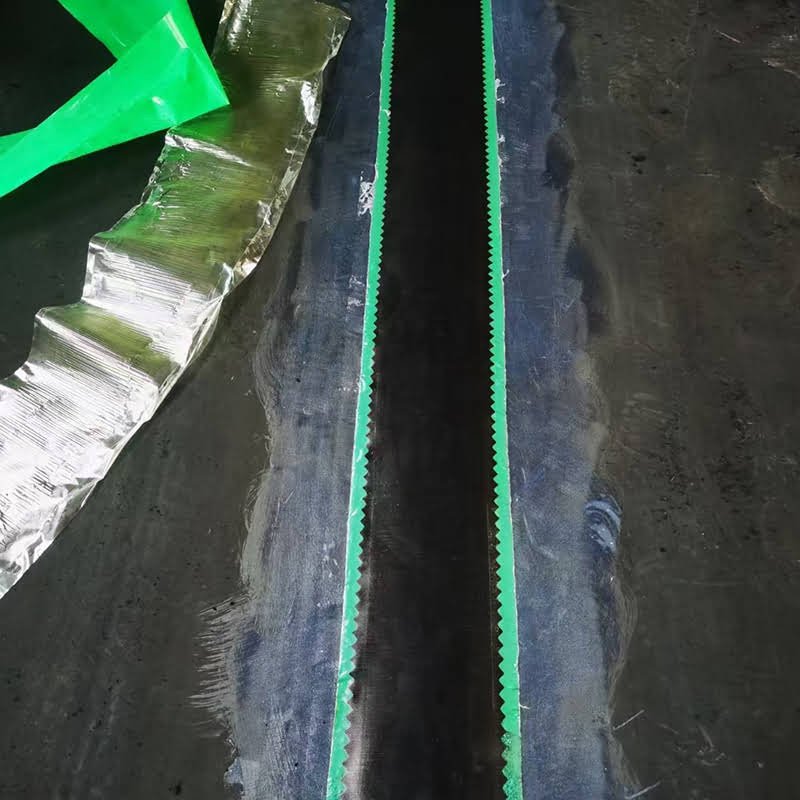
| Longitudinal Rip | Repair Strip (Reinforced) | Cut a length of Repair Strip to run the full length of the rip as a reinforcing overlay, bonded with HUAYE-818 along both edges of the tear. The embedded fabric layer in the Reinforced type helps resist further tear propagation. |
| Surface Gouge / Scratch / Edge Wear | Repair Strip (Standard) | Cut Repair Strip to size and bond directly over the gouged, scratched, or worn edge section to rebuild the cover surface — no extra tensile reinforcement required for surface-level damage. |
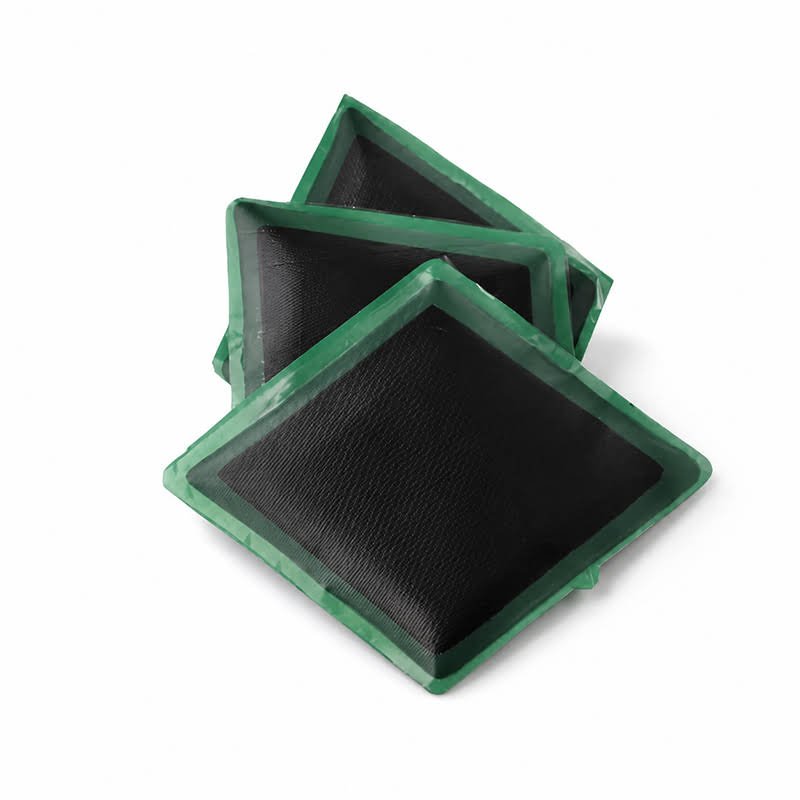
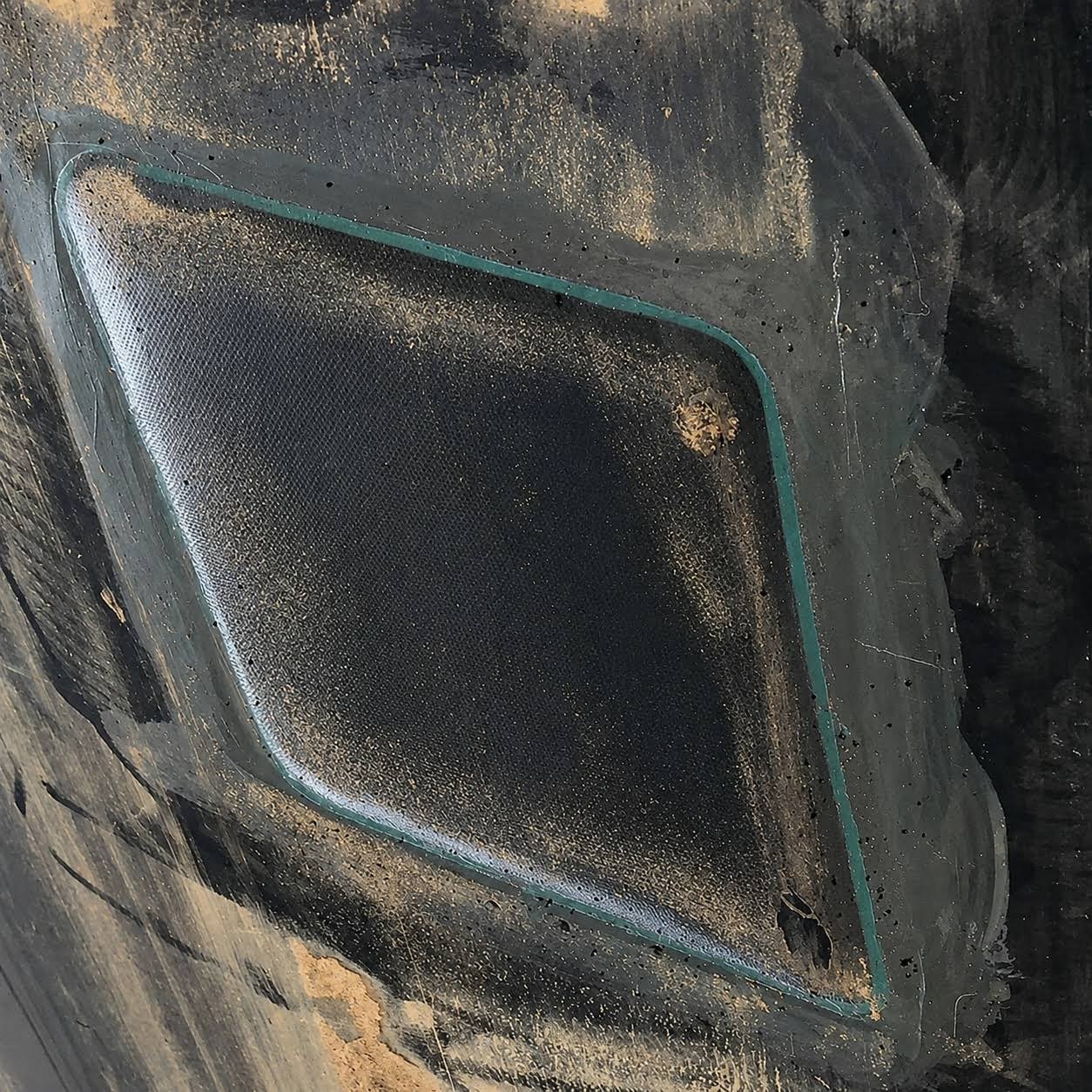
| Puncture (Through-Hole) | Repair Patch | Select a Repair Patch sized to fully cover the puncture with overlap onto sound belt on all sides, sealing the hole and restoring a continuous belt surface. |
| Cold-Vulcanized Splice Sealing | Repair Strip | Used to seal the edge of a cold-vulcanized splice joint, closing gaps at the joint boundary. |
When Not to Use a Repair Strip or Patch
As a general guideline, if damage width exceeds roughly 25% of the belt’s total width, localized strip or patch repair is typically no longer the appropriate solution — consider a full re-splice or belt section replacement instead. This also applies where the carcass itself is exposed, steel cords are corroded, or fabric plies are delaminated, since a surface strip cannot restore structural tension in these cases. Contact us if you’re unsure whether your damage is suitable for strip/patch repair.
How It Bonds — CN Semi-Cured Backing Layer
Semi-Cured CN Layer
The bonding side of the Repair Strip and Repair Patch is pre-manufactured with a semi-cured CN layer. When paired with HUAYE-818 cold vulcanizing bonding agent, this layer reacts chemically with the adhesive during application, forming a bonded joint without requiring heat or pressure from a vulcanizing press.
Because the CN layer is already semi-cured at the factory, it should not be ground or buffed before use — doing so can damage the layer and reduce bond performance. Surface preparation (grinding and buffing) is needed only on the belt side of the repair, not on the CN layer itself.
Material Types
For each width, Conveyor Belt Repair Strip is available in two thickness options: a Standard type and a thicker Reinforced type with an embedded fabric layer. A flame-retardant option is also available on request.
| Material Type | Construction | Best For |
|---|---|---|
| Standard (Thinner) | Rubber compound with CN semi-cured backing layer | Long-distance scratches, surface wear, minor cuts — no structural reinforcement needed |
| Reinforced (Thicker) | Rubber compound with embedded high-strength polyester fabric layer for improved tensile performance, plus CN semi-cured backing layer | Longitudinal rips and larger damage where extra tear resistance is needed |
At each width, the thinner option is Standard type and the thicker option is Reinforced type — see the Material Type column in the specification table below.
Rubber hardness is calibrated to match typical conveyor belt cover hardness, helping the repair sit flush with the surrounding belt surface without creating stress points at the repair edge.
A flame-retardant version is also available — contact us if your application requires flame-retardant certification.
Technical Specifications
Compatible with EP, NN, steel cord, and PVC conveyor belts.
Repair Strip (Sold by Roll)
For long scratches, wear tracks, edge wear, and longitudinal rips along the belt surface, and for sealing cold-vulcanized splice edges.
| Purchase Code | Material Type | Thickness (mm) | Width (mm) | Roll Length (m) |
|---|---|---|---|---|
| HY3111310 | Standard | 2.2 | 100 | 10 |
| HY3111315 | Standard | 3.2 | 150 | 10 |
| HY3111322 | Standard | 3.2 | 220 | 10 |
| HY3111330 | Standard | 3.4 | 300 | 10 |
| HY3111340 | Standard | 3.4 | 400 | 10 |
| HY3111410 | Reinforced | 3.6 | 100 | 10 |
| HY3111415 | Reinforced | 4.6 | 150 | 10 |
| HY3111420 | Reinforced | 4.6 | 220 | 10 |
| HY3111430 | Reinforced | 4.8 | 300 | 10 |
| HY3111440 | Reinforced | 4.8 | 400 | 10 |
Each roll is 10 meters long. Cut to length on-site to match your repair area.
Repair Patch (Sold by Piece)
For patching localized punctures and small areas of surface damage.
| Reference Size | Dimensions (mm) |
|---|---|
| Small | 160 × 135 |
| Medium | 260 × 200 |
| Large | 360 × 270 |
| Extra Large | 470 × 450 |
Reference sizes shown above. Custom-cut sizes are available on request — contact us with your hole or damage dimensions.
How to Apply Conveyor Belt Repair Strip / Patch
Both formats are applied using HUAYE-818 cold vulcanizing bonding agent, reacting with the CN semi-cured backing layer. Light-load operation is often possible within a couple of hours, though full bond strength typically continues developing over a longer cure period — allow more time before returning the belt to full, heavy-load operation.
- Safety Preparation: Stop the belt and isolate power before starting work. Clear surrounding material and wear appropriate protective gloves.
- Grind and Shape the Belt Surface: Using an angle grinder, buff the damaged area of the belt and the surrounding 3–5 cm to a rough finish. Bevel the edges of the repair area to roughly a 45° angle so the strip or patch sits flush. Do not grind or buff the CN layer on the back of the repair strip/patch itself — keep it clean and apply adhesive directly.
-
Select Your Bonding Approach:
- Standard belts: HUAYE-818 cold vulcanizing bonding agent + Repair Strip/Patch (CN semi-cured layer)
- Older or oil-contaminated belts: apply a primer coat before the bonding agent for improved adhesion
- Apply the Bonding Agent: Mix the HUAYE-818 main agent with the 868 curing agent per the recommended ratio. Brush the mixture onto both the prepared belt surface and the CN layer of the strip/patch — two coats each, allowing each coat to dry until tacky (not wet) before applying the next.
- Press and Bond: Position the repair strip or patch onto the damaged area and press firmly with a roller, working from center to edges to expel any trapped air.
- Seal the Edges: Brush bonding agent along the exposed edges of the repair strip or patch to ensure a fully sealed perimeter.
Frequently Asked Questions
Do I need vulcanizing equipment to install the repair strip or patch?
No. Both formats are cold-bonded using HUAYE-818 bonding agent, which reacts chemically with the pre-applied CN semi-cured layer — there is no need for a vulcanizing press, curing oven, or on-site power supply for heating equipment.
What is the CN layer on the back of the repair strip?
The bonding side of the Repair Strip and Repair Patch is factory-manufactured with a semi-cured CN layer. This layer reacts with HUAYE-818 cold vulcanizing bonding agent during application, forming the bonded joint without heat or pressure from a press. The CN layer should not be ground or buffed before use — keep it clean and apply adhesive directly.
What is the difference between the Standard and Reinforced types?
Standard type is the thinner option at each width and is suited to surface scratches, wear, and minor cuts. Reinforced type is thicker and includes an embedded high-strength polyester fabric layer for improved tensile performance, suited to longitudinal rips and larger damage. A flame-retardant version is also available on request.
My belt has a longitudinal rip — should I use the strip or the patch?
Use the Reinforced Repair Strip. Cut a length to run the full extent of the rip and bond it as a reinforcing overlay along both edges of the tear with HUAYE-818.
My belt has a punctured hole — should I use the strip or the patch?
Use the Repair Patch. Select a size that fully covers the puncture with overlap onto sound belt on all sides, then bond in place with HUAYE-818 to seal the hole.
Can the repair strip be used to seal a cold-vulcanized splice joint?
Yes. Repair Strip can be used to seal the edge of a cold-vulcanized splice joint, closing gaps at the joint boundary.
Is there a limit to how large a damaged area a repair strip or patch can cover?
As a general guideline, if the damage width exceeds roughly 25% of the belt’s total width, localized repair is typically no longer appropriate — a full re-splice or belt replacement should be considered instead. This also applies if the belt carcass is exposed or structurally compromised. Contact us if you’re unsure.
How long before the belt can return to operation?
Light-load operation is often possible within a couple of hours, but full bond strength typically continues developing over a longer cure period. Allow additional time before returning the belt to full, heavy-load operation — actual timing depends on the extent of damage and site conditions.
What belt types are compatible with the repair strip and patch?
Compatible with EP, NN, steel cord, and PVC conveyor belts.
What adhesive is used with the repair strip and patch?
Conveyor Belt Repair Strip and Repair Patch are designed for use with HUAYE-818 cold vulcanizing bonding agent (main agent + 868 curing agent).
How long is each roll of repair strip?
Each roll is 10 meters long. Available in a range of thicknesses (2.2mm–4.8mm) and widths (100mm–400mm) — see the specification table above.
Can I get a custom size for the repair patch?
Yes. The sizes listed above are reference sizes. If your damaged area doesn’t match a standard size, contact us with your hole or damage dimensions and we can confirm a custom-cut option.
What should I do for old or oil-contaminated belts?
Apply a primer coat before the bonding agent to improve adhesion on older or oil-contaminated belt surfaces.