
Step-by-Step Guide: How to Repair a Conveyor Belt Effectively
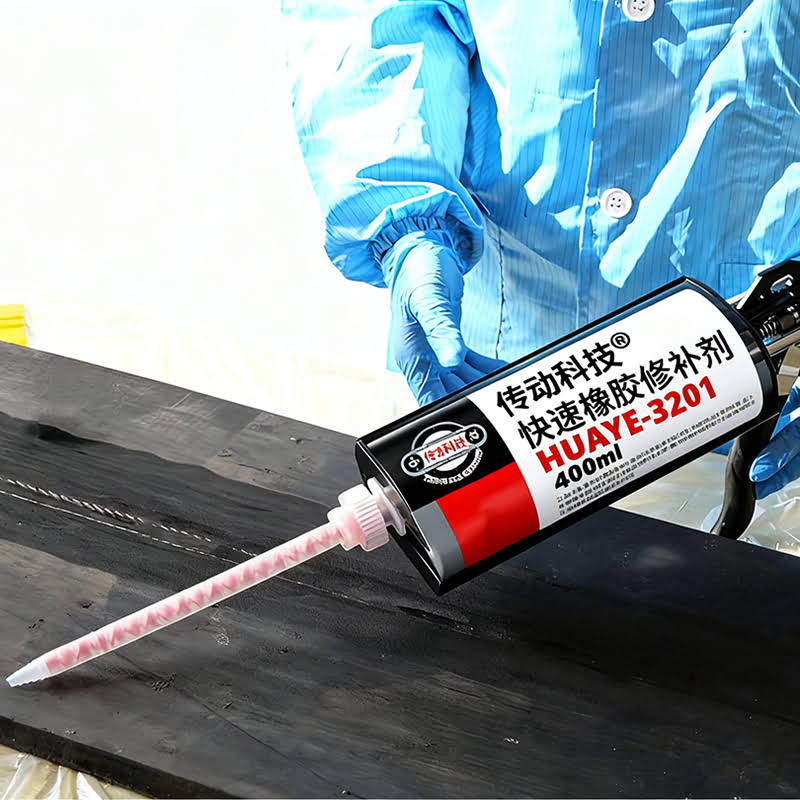
HUAYE-3201 Cold Repair Adhesive
Conveyor belts are essential components in industries such as mining, cement, steel, ports, and bulk material handling. During daily operation, continuous impact, abrasion, and heavy loads can cause cuts, cracks, and surface damage on conveyor belts.
Small damages may seem insignificant at first, but if they are ignored, they can expand quickly and lead to unexpected downtime or even complete belt failure.
Using a reliable conveyor belt repair adhesive is an efficient way to restore damaged areas and extend conveyor belt service life.
HUAYE-3201 Cold Repair Adhesive provides a fast and convenient solution for on-site conveyor belt repair without requiring hot vulcanizing equipment. This article explains how to repair a damaged conveyor belt step by step using HUAYE-3201.
What Causes Conveyor Belt Damage?
Conveyor belts operate under harsh conditions, and several factors can cause rubber damage:
Material Impact
Large stones, ores, and bulk materials can create strong impact forces when falling onto the belt surface.
Abrasion
Continuous contact between the belt and abrasive materials gradually removes the rubber cover.
Sharp Materials
Sharp edges from minerals or metal objects can cut or puncture the belt surface.
Heavy-Duty Operation
Long operating hours and high loads accelerate rubber fatigue and wear.
Regular inspection and timely repair can prevent minor damage from becoming a major failure.
Why Repair Conveyor Belts Instead of Replacing Them?
Replacing a complete conveyor belt requires:
- High material costs
- Long shutdown time
- Additional labor
- Production losses
For localized damage, professional repair materials can restore the damaged area quickly and economically.
A proper conveyor belt repair solution helps:
- Reduce downtime
- Extend belt service life
- Lower maintenance costs
- Improve production efficiency
What Is HUAYE-3201 Cold Repair Adhesive?
HUAYE-3201 Cold Repair Adhesive is a high-performance repair material specially designed for rubber conveyor belt maintenance.
Unlike hot repair methods, HUAYE-3201 cures at room temperature and does not require heating equipment during application.
It is suitable for repairing:
- Conveyor belt cuts
- Rubber surface damage
- Small tears
- Wear areas
- Localized belt defects
With strong adhesion and excellent durability, HUAYE-3201 helps restore damaged conveyor belts quickly and effectively.
Advantages of HUAYE-3201
Easy Cold Application
HUAYE-3201 can be applied directly at the repair site without hot vulcanizing equipment.
Strong Bonding Performance
The adhesive creates a strong connection with the rubber surface, helping maintain repair durability during operation.
Fast Curing
The repaired area typically reaches initial cure within approximately 30–60 minutes, with full operation possible after about 2 hours — reducing conveyor downtime.
Suitable for Various Conveyor Belts
HUAYE-3201 can be used on different types of rubber conveyor belts in industrial applications.
Tools Required for Conveyor Belt Repair
Before starting the repair process, prepare:
- HUAYE-3201 Cold Repair Adhesive
- Cartridge dispensing gun
- Angle grinder
- Scraper or putty knife
- Lint-free cloth or HUAYE-850 cleaning agent (for degreasing the repair surface)
- Protective gloves
Proper tools help ensure a smooth and reliable repair.
Step-by-Step Guide: How to Repair a Conveyor Belt with HUAYE-3201
-
Step 1: Grind the Damaged Area
Use an angle grinder to prepare the damaged section. Remove loose rubber and damaged material until the surface becomes rough and suitable for bonding. A rough surface increases the contact area between the adhesive and the conveyor belt rubber, improving bonding strength.
-
Step 2: Clean the Repair Surface
After grinding, remove all dust, rubber particles, and debris using a lint-free cloth or HUAYE-850 cleaning agent. The repair area must be clean, dry, and free from loose particles. Proper surface preparation is one of the most important factors affecting repair quality.
-
Step 3: Apply HUAYE-3201 Adhesive
Install HUAYE-3201 into the dispensing gun and apply the adhesive evenly along the damaged area. Fill all cracks and damaged sections completely, ensure there are no empty areas, and avoid trapping air inside the repair area. A complete filling process ensures better repair strength.
-
Step 4: Smooth and Level the Repair Surface
After applying the adhesive, use a scraper to flatten and compress the repair material. The repaired surface should be level with the original conveyor belt surface. A smooth repair area helps reduce material accumulation and improves belt operation.
-
Step 5: Allow the Adhesive to Cure
Leave the repaired area at room temperature for approximately 30–60 minutes for initial cure. The conveyor belt can typically return to operation after about 2 hours. Allowing sufficient curing time improves long-term durability.
Watch the Full Repair Process
See the complete HUAYE-3201 repair process from start to finish in the video below.
Common Mistakes During Conveyor Belt Repair
Poor Surface Preparation
Applying adhesive on a dusty or loose surface can significantly reduce bonding performance.
Incomplete Filling
Leaving gaps inside the damaged area may cause premature repair failure.
Restarting Too Quickly
Although the repair can be used after initial curing, allowing sufficient curing time improves long-term durability.
Uneven Repair Surface
A raised or uneven repair area may affect belt operation and material flow.
Applications of HUAYE-3201 Conveyor Belt Repair Adhesive
HUAYE-3201 is widely used in:
- Mining operations
- Cement plants
- Steel factories
- Ports
- Power plants
- Aggregate processing plants
It is suitable for maintenance teams that need a quick and reliable conveyor belt repair solution.
HUAYE-3201 vs Traditional Repair Methods
| Repair Method | HUAYE-3201 Cold Repair Adhesive | Traditional Repair |
|---|---|---|
| Heating equipment | Not required | Sometimes required |
| On-site operation | Easy | More complicated |
| Repair speed | Fast | Longer downtime |
| Equipment requirement | Simple tools | More equipment |
| Emergency repair | Suitable | Limited |
Extend Conveyor Belt Service Life with Proper Maintenance
A conveyor belt does not always need replacement when damage occurs.
With regular inspection and timely repair using suitable materials like HUAYE-3201 Cold Repair Adhesive, companies can reduce unexpected downtime and maximize the service life of their conveyor systems.
For industries that depend on continuous material transportation, fast and reliable repair solutions are essential.
Frequently Asked Questions
How long does HUAYE-3201 take to cure?
The repaired area typically reaches initial cure within approximately 30–60 minutes at room temperature, with full operation possible after about 2 hours.
Does HUAYE-3201 require heating equipment?
No. HUAYE-3201 is a cold repair adhesive designed for room-temperature application.
What damage can HUAYE-3201 repair?
It can repair conveyor belt cuts, cracks, surface wear, and localized rubber damage.
Can HUAYE-3201 be used for emergency conveyor belt repair?
Yes. Its fast curing performance makes it suitable for quick on-site maintenance and emergency repairs.
Conclusion
Conveyor belt damage can lead to costly production interruptions if not repaired in time.
Using HUAYE-3201 Cold Repair Adhesive provides a simple, fast, and reliable method for restoring damaged conveyor belts. With proper surface preparation and correct application, maintenance teams can extend belt life while reducing downtime and repair costs.
HUAYE provides professional conveyor belt repair solutions for industrial applications worldwide.
Need HUAYE-3201 for Your Next Repair?
Tell us your belt type and damage — we’ll confirm availability and shipping to your location.
Chat with Peter Zhang on WhatsApp